

Clay Mask vs. AHA: Which Is Better for Clogged Pores?

Clay Mask vs. AHA: Which Is Better for Clogged Pores? - Root & Renew

Choose a clay mask for temporary surface-oil absorption, or an AHA for exfoliating rough, dull surface skin. Neither is a guaranteed solution for blackheads, which may respond better to salicylic acid or a targeted acne treatment. If clogged pores and excess oil are on your mind, the most useful first step is understanding what each treatment actually does. Both clay masks and AHAs (alpha hydroxy acids) play roles in supporting clearer, more balanced skin, but which one is best comes down to the specific issue you want to address and how your skin responds. At Root + Renew, our perspective is that smarter skincare is about matching targeted treatments with your true needs—never about piling on more steps or hoping for instant miracles.

Direct Comparison: Clay Masks vs AHA for Oil and Congestion

In our barrier-first approach, here’s how clay masks and AHAs differ for oily, congested, or rough skin:

Concern Clay Mask AHA (Alpha Hydroxy Acid)
Absorbing excess surface oil Absorbs oil and reduces shine immediately after rinsing Not an oil-absorbing step
Unclogging pores/buildup Absorbs surface oil; it does not physically pull deep clogs from pores Loosens dead surface cells that can contribute to clogged-looking pores
Removing dead skin/dullness Removes some surface buildup with rinse-off action Specifically exfoliates the skin’s outermost layers
Dry or tight skin risk Can feel drying if left on too long or used too often May cause irritation if overused or layered

To sum up: Choose a clay mask for temporary shine reduction or an AHA for rough, dull texture. If both fit your routine, introduce them separately and avoid stacking irritating treatments. For persistent blackheads, evidence-backed acne ingredients such as salicylic acid can be more directly relevant.

Clay Masks Explained: How They Help Clogged Pores and Excess Oil

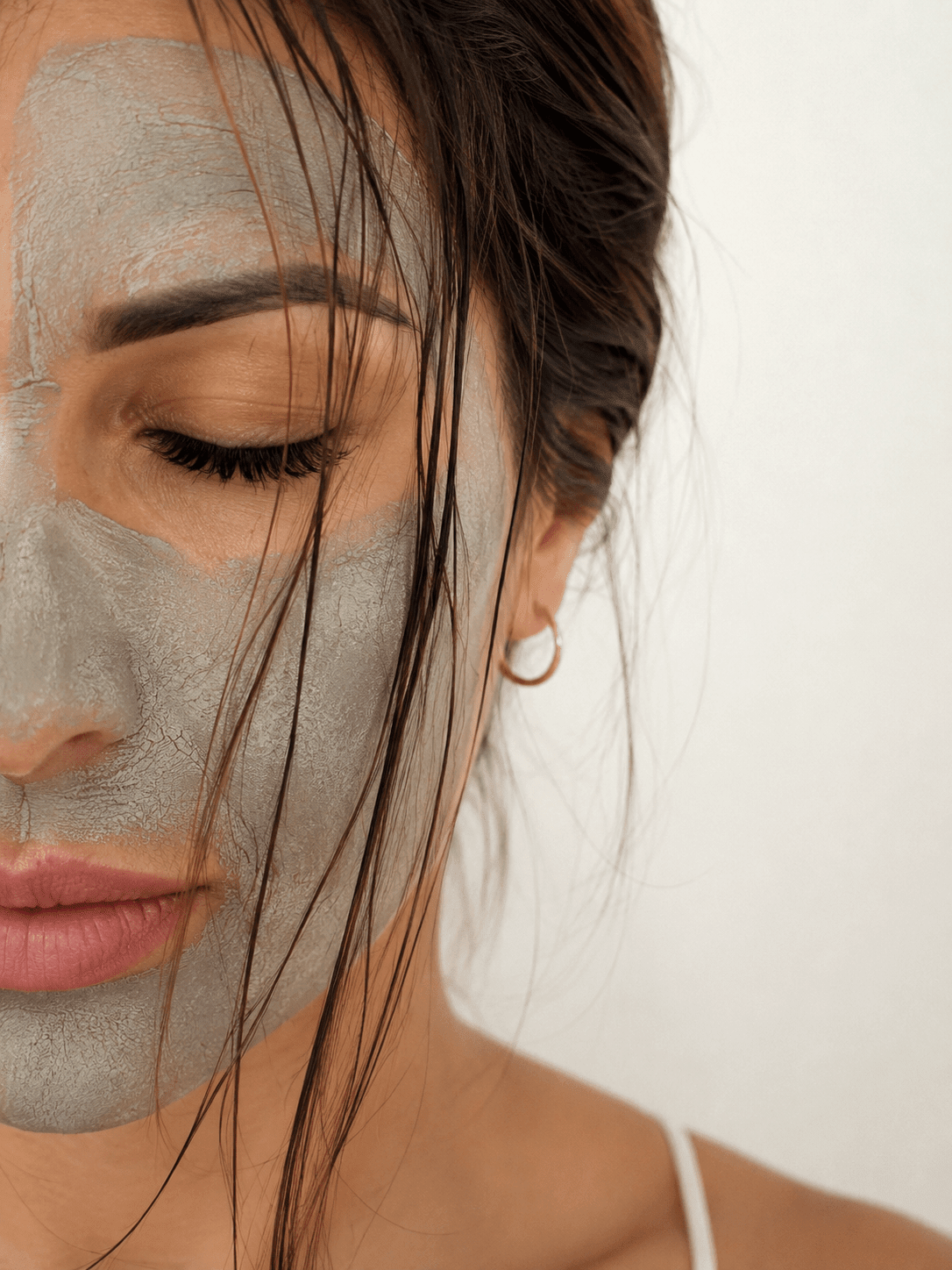
Clay masks have been used for generations to absorb oil and impurities from the skin’s surface. Their effect is straightforward: mineral-rich clays (like kaolin or green clay) grab onto oil, debris, and environmental buildup while the mask is on, leaving your skin feeling cleaner and less shiny after you rinse.

The Deep Clean — Purifying Clay Mask from Root + Renew is formulated for exactly this purpose. It’s designed to treat oilier areas and congestion without causing the dryness and discomfort many clay masks can leave behind. The combination of white and green clay draws out excess oil and buildup, while gentle lactic acid helps exfoliate dead skin at the surface. Calming botanical extracts (like cucumber and sage) help you finish with comfortable, refined-looking skin instead of feeling stripped or tight.

Why Use a Clay Mask?

  • You have a persistently shiny T-zone, especially after activity or during warm weather.
  • The feel of daily buildup (from sweat, sunscreen, or environment) leaves your skin looking congested.
  • You prefer a treatment you do once or twice a week, not another daily active.
  • Your skin does not tolerate frequent acid exfoliation, but you want a way to address surface congestion.

How to Use a Clay Mask Effectively

  1. Start with clean, dry skin using a gentle cleanser. (Learn how to spot a harsh cleanser if you are uncertain.)
  2. Apply a thin layer of clay mask to oilier or congested areas—often the T-zone, not necessarily your entire face.
  3. Leave the mask on for the time indicated on the product. Do not let it become completely dry and cracked, since that does not improve results and may stress your skin barrier.
  4. Rinse thoroughly with lukewarm water, avoiding harsh scrubbing.
  5. Follow with hydration and a lightweight moisturizer to replenish your barrier.

Follow the mask directions and adjust based on tolerance. Frequent oil-absorbing or exfoliating steps can cause dryness and irritation. For guidance on minimalist routines, read our guide to streamlined regimens.

What Is an AHA (Alpha Hydroxy Acid) and What Does It Do?

AHAs, or alpha hydroxy acids, include glycolic and lactic acids. They help loosen connections between dead surface cells. With regular use, this can help reduce rough texture, even skin’s appearance, and make your products absorb more smoothly.

The difference from clay is key: AHAs directly target dead cell buildup and surface dullness instead of oil absorption. They do not directly "degrease" the skin, but rather support the gradual clearing of congested-looking pores by helping skin shed excess buildup more efficiently.

When Is an AHA the Better Choice?

  • Your skin feels rough, bumpy, or looks dull, regardless of oiliness.
  • You want to address rough surface texture. Product pilling alone does not prove a buildup of dead skin cells.
  • You want to address uneven-looking tone and texture as part of your pore care strategy.

Follow the specific AHA product’s directions rather than assuming every acid must be used at night or on the same weekly schedule. Introduce new exfoliants cautiously and use broad-spectrum sunscreen because AHAs can increase sun sensitivity. The Deep Clean — Purifying Clay Mask actually includes lactic acid for gentle surface exfoliation, giving you some AHA benefits in a clay mask format—making it a unique two-for-one if you’re simplifying your routine.

Best Practices for Managing Oily, Congested Skin

  • Prioritize cleansing, moisture, and protection daily. Those are the foundations. Exfoliants and masks are add-ons, not replacements.
  • Start slow with treatments. Introduce only one new active at a time. Watch your skin’s response.
  • Do not combine intense exfoliants. Avoid using scrubs, clay masks, and strong acids back-to-back.
  • Listen for signs of barrier stress. If skin feels tight, flaky, or uncomfortable, scale back actives and focus on hydration and barrier repair until recovered.
  • Use sunscreen faithfully. This is vital after any exfoliation to help maintain results and prevent long-term skin damage. (See our sunscreen guide for best practices.)

A Sample Simple Routine for Oily or Clogged-Prone Skin

Morning

  1. Wash with a gentle cleanser or simply rinse if not needed.
  2. Apply a hydration serum if skin feels dehydrated.
  3. Use a lightweight moisturizer as needed.
  4. Finish with a high-protection SPF.

Evening

  1. Gently remove sunscreen, makeup, and daily grime with cleanser.
  2. On "treatment" days, use either a clay mask or AHA (never together when starting out).
  3. Restore hydration with a serum or calming toner.
  4. Seal in moisture with a comfortable, non-greasy cream or hydration gel.

If you need more on exfoliation limits, read our guide to AHAs and skin-barrier irritation.

Frequently Asked Questions

Should I use a clay mask or an AHA for blackheads?

Clay masks can help absorb oil and surface residue, which temporarily makes pores look smaller and less congested. AHAs help exfoliate dead skin that can contribute to that "clogged" look. For blackheads that persist, especially if they are deep or very frequent, specific pore-level treatments or professional advice may be more effective.

How often is safe for a clay mask if my skin is oily?

Most people benefit from using a clay mask once per week, or twice if skin remains comfortable and not tight. There’s rarely a need to use one daily, even for persistently oily skin, as this can leave your barrier compromised. Focus on targeted, intentional care.

Is it ok to use an AHA after a clay mask?

Using both on the same day is not generally recommended when you’re just starting out. Overlapping oil-removal and exfoliation can push sensitive or barrier-stressed skin into irritation. Let your skin signal when it’s ready—alternate, rather than combine, for best results.

Why does oily skin sometimes feel "tight" after masking?

Oily skin can still be dehydrated. Tightness or flaking after a clay mask points to water loss or barrier disruption, not just oil removal. Always replenish moisture with a hydrating product and lightweight moisturizer after masking.

Can I skip moisturizer if I’m already oily?

Oily skin can benefit from moisturizer, especially if a mask or exfoliant leaves it feeling dry or tight. Choose a tolerable texture; a lightweight gel may feel more comfortable if you dislike rich creams.

The Bottom Line

The choice between clay mask and AHA depends on what your skin actually needs—oil absorption, surface smoothing, or both. The simplest approach is to pick one targeted treatment at a time, layer it into your routine thoughtfully, and dial it back at the first sign of discomfort. If you’re looking for clarity, less shine, and comfort after each use, The Deep Clean — Purifying Clay Mask offers a careful balance of oil absorption and gentle surface exfoliation, with hydration and calm built in.

The practical approach is a consistent routine and the confidence to skip treatments you do not need. For more barrier-first tips and evidence-informed advice, browse the Skinminimalism Journal series or map your custom regimen with our Routine Builder.
Article Topic Here

Here can be a short preview of the article to grab readers’ attention.

 
← The Glow Edit

The Glow Edit

Clay Mask vs. AHA: Which Is Better for Clogged Pores?

October 28, 2026Root + Renewskincare education
Clay Mask vs. AHA: Which Is Better for Clogged Pores? - Root & Renew

Choose a clay mask for temporary surface-oil absorption, or an AHA for exfoliating rough, dull surface skin. Neither is a guaranteed solution for blackheads, which may respond better to salicylic acid or a targeted acne treatment. If clogged pores and excess oil are on your mind, the most useful first step is understanding what each treatment actually does. Both clay masks and AHAs (alpha hydroxy acids) play roles in supporting clearer, more balanced skin, but which one is best comes down to the specific issue you want to address and how your skin responds. At Root + Renew, our perspective is that smarter skincare is about matching targeted treatments with your true needs—never about piling on more steps or hoping for instant miracles.

Direct Comparison: Clay Masks vs AHA for Oil and Congestion

In our barrier-first approach, here’s how clay masks and AHAs differ for oily, congested, or rough skin:

Concern Clay Mask AHA (Alpha Hydroxy Acid)
Absorbing excess surface oil Absorbs oil and reduces shine immediately after rinsing Not an oil-absorbing step
Unclogging pores/buildup Absorbs surface oil; it does not physically pull deep clogs from pores Loosens dead surface cells that can contribute to clogged-looking pores
Removing dead skin/dullness Removes some surface buildup with rinse-off action Specifically exfoliates the skin’s outermost layers
Dry or tight skin risk Can feel drying if left on too long or used too often May cause irritation if overused or layered

To sum up: Choose a clay mask for temporary shine reduction or an AHA for rough, dull texture. If both fit your routine, introduce them separately and avoid stacking irritating treatments. For persistent blackheads, evidence-backed acne ingredients such as salicylic acid can be more directly relevant.

Clay Masks Explained: How They Help Clogged Pores and Excess Oil

Clay masks have been used for generations to absorb oil and impurities from the skin’s surface. Their effect is straightforward: mineral-rich clays (like kaolin or green clay) grab onto oil, debris, and environmental buildup while the mask is on, leaving your skin feeling cleaner and less shiny after you rinse.

The Deep Clean — Purifying Clay Mask from Root + Renew is formulated for exactly this purpose. It’s designed to treat oilier areas and congestion without causing the dryness and discomfort many clay masks can leave behind. The combination of white and green clay draws out excess oil and buildup, while gentle lactic acid helps exfoliate dead skin at the surface. Calming botanical extracts (like cucumber and sage) help you finish with comfortable, refined-looking skin instead of feeling stripped or tight.

Why Use a Clay Mask?

  • You have a persistently shiny T-zone, especially after activity or during warm weather.
  • The feel of daily buildup (from sweat, sunscreen, or environment) leaves your skin looking congested.
  • You prefer a treatment you do once or twice a week, not another daily active.
  • Your skin does not tolerate frequent acid exfoliation, but you want a way to address surface congestion.

How to Use a Clay Mask Effectively

  1. Start with clean, dry skin using a gentle cleanser. (Learn how to spot a harsh cleanser if you are uncertain.)
  2. Apply a thin layer of clay mask to oilier or congested areas—often the T-zone, not necessarily your entire face.
  3. Leave the mask on for the time indicated on the product. Do not let it become completely dry and cracked, since that does not improve results and may stress your skin barrier.
  4. Rinse thoroughly with lukewarm water, avoiding harsh scrubbing.
  5. Follow with hydration and a lightweight moisturizer to replenish your barrier.

Follow the mask directions and adjust based on tolerance. Frequent oil-absorbing or exfoliating steps can cause dryness and irritation. For guidance on minimalist routines, read our guide to streamlined regimens.

What Is an AHA (Alpha Hydroxy Acid) and What Does It Do?

AHAs, or alpha hydroxy acids, include glycolic and lactic acids. They help loosen connections between dead surface cells. With regular use, this can help reduce rough texture, even skin’s appearance, and make your products absorb more smoothly.

The difference from clay is key: AHAs directly target dead cell buildup and surface dullness instead of oil absorption. They do not directly "degrease" the skin, but rather support the gradual clearing of congested-looking pores by helping skin shed excess buildup more efficiently.

When Is an AHA the Better Choice?

  • Your skin feels rough, bumpy, or looks dull, regardless of oiliness.
  • You want to address rough surface texture. Product pilling alone does not prove a buildup of dead skin cells.
  • You want to address uneven-looking tone and texture as part of your pore care strategy.

Follow the specific AHA product’s directions rather than assuming every acid must be used at night or on the same weekly schedule. Introduce new exfoliants cautiously and use broad-spectrum sunscreen because AHAs can increase sun sensitivity. The Deep Clean — Purifying Clay Mask actually includes lactic acid for gentle surface exfoliation, giving you some AHA benefits in a clay mask format—making it a unique two-for-one if you’re simplifying your routine.

Best Practices for Managing Oily, Congested Skin

  • Prioritize cleansing, moisture, and protection daily. Those are the foundations. Exfoliants and masks are add-ons, not replacements.
  • Start slow with treatments. Introduce only one new active at a time. Watch your skin’s response.
  • Do not combine intense exfoliants. Avoid using scrubs, clay masks, and strong acids back-to-back.
  • Listen for signs of barrier stress. If skin feels tight, flaky, or uncomfortable, scale back actives and focus on hydration and barrier repair until recovered.
  • Use sunscreen faithfully. This is vital after any exfoliation to help maintain results and prevent long-term skin damage. (See our sunscreen guide for best practices.)

A Sample Simple Routine for Oily or Clogged-Prone Skin

Morning

  1. Wash with a gentle cleanser or simply rinse if not needed.
  2. Apply a hydration serum if skin feels dehydrated.
  3. Use a lightweight moisturizer as needed.
  4. Finish with a high-protection SPF.

Evening

  1. Gently remove sunscreen, makeup, and daily grime with cleanser.
  2. On "treatment" days, use either a clay mask or AHA (never together when starting out).
  3. Restore hydration with a serum or calming toner.
  4. Seal in moisture with a comfortable, non-greasy cream or hydration gel.

If you need more on exfoliation limits, read our guide to AHAs and skin-barrier irritation.

Frequently Asked Questions

Should I use a clay mask or an AHA for blackheads?

Clay masks can help absorb oil and surface residue, which temporarily makes pores look smaller and less congested. AHAs help exfoliate dead skin that can contribute to that "clogged" look. For blackheads that persist, especially if they are deep or very frequent, specific pore-level treatments or professional advice may be more effective.

How often is safe for a clay mask if my skin is oily?

Most people benefit from using a clay mask once per week, or twice if skin remains comfortable and not tight. There’s rarely a need to use one daily, even for persistently oily skin, as this can leave your barrier compromised. Focus on targeted, intentional care.

Is it ok to use an AHA after a clay mask?

Using both on the same day is not generally recommended when you’re just starting out. Overlapping oil-removal and exfoliation can push sensitive or barrier-stressed skin into irritation. Let your skin signal when it’s ready—alternate, rather than combine, for best results.

Why does oily skin sometimes feel "tight" after masking?

Oily skin can still be dehydrated. Tightness or flaking after a clay mask points to water loss or barrier disruption, not just oil removal. Always replenish moisture with a hydrating product and lightweight moisturizer after masking.

Can I skip moisturizer if I’m already oily?

Oily skin can benefit from moisturizer, especially if a mask or exfoliant leaves it feeling dry or tight. Choose a tolerable texture; a lightweight gel may feel more comfortable if you dislike rich creams.

The Bottom Line

The choice between clay mask and AHA depends on what your skin actually needs—oil absorption, surface smoothing, or both. The simplest approach is to pick one targeted treatment at a time, layer it into your routine thoughtfully, and dial it back at the first sign of discomfort. If you’re looking for clarity, less shine, and comfort after each use, The Deep Clean — Purifying Clay Mask offers a careful balance of oil absorption and gentle surface exfoliation, with hydration and calm built in.

The practical approach is a consistent routine and the confidence to skip treatments you do not need. For more barrier-first tips and evidence-informed advice, browse the Skinminimalism Journal series or map your custom regimen with our Routine Builder.