

Skin that feels tight, flaky, or uncomfortable often leaves people wondering, “Is this dry skin or dehydrated skin?” Understanding the difference is key to choosing whether you need a serum, a moisturizer, or both. At Root + Renew, we simplify the decision. If your skin feels tight and parched, but still gets oily or you’re not sure if it’s always dry, you’re likely dealing with dehydration (a lack of water). If your skin is consistently rough, flaky, and lacks oil, that’s most often true dry skin (a lack of lipids or oil). The solution depends on what your skin is missing: water, oil, or both.
For dehydrated skin, a hydrating serum followed by a moisturizer often delivers the visible comfort and plumpness people want. For dry skin, a moisturizer is usually your foundation. In many cases—especially when skin feels both tight and flaky—using both a serum and a moisturizer makes sense, as each plays a different role.
Dehydrated Skin vs Dry Skin: The Simple, Practical Difference
Let’s get clear: dry skin is a skin type that lacks oil. Dehydrated skin is a temporary condition of lacking water in the upper layers. This distinction matters, because true dry skin needs to replenish lost lipids (oils), while dehydrated skin needs water-binding support. Many people have dehydrated skin without being dry, and both issues can feel similarly uncomfortable—it’s not always either/or.
What is Dehydrated Skin?
- Condition where the skin is lacking water, not oil
- Can happen to anyone, including those with oily or combination skin
- Typical triggers: weather changes, air travel, over-cleansing, air conditioning, stress
- Often feels tight, looks a bit dull, and fine lines become more visible
What is Dry Skin?
- Skin type that consistently produces less oil (sebum) than average
- Feels rough or flaky, even after cleansing and moisturizing
- Often sensitive, easily irritated, and tends to worsen with age
- Needs more lipid-rich, barrier-supporting creams
How to Tell: Is Your Skin Dehydrated, Dry, or Both?
- If skin feels tight and dull, especially after cleansing or exposure to wind, you’re likely dehydrated.
- If skin feels rough and flaky throughout the day (not just after cleansing), you probably have dry skin.
- If you have both rough patches and tightness, your skin can be both dry and dehydrated.
Think about timing and triggers. Chronic discomfort usually suggests dryness, while sudden tightness after cleansing or seasonal changes often signals dehydration. We talk more about how to choose a gentle cleanser without stripping your skin in this guide.
Do You Need a Serum, a Moisturizer, or Both?
Here’s how Root + Renew approaches it:
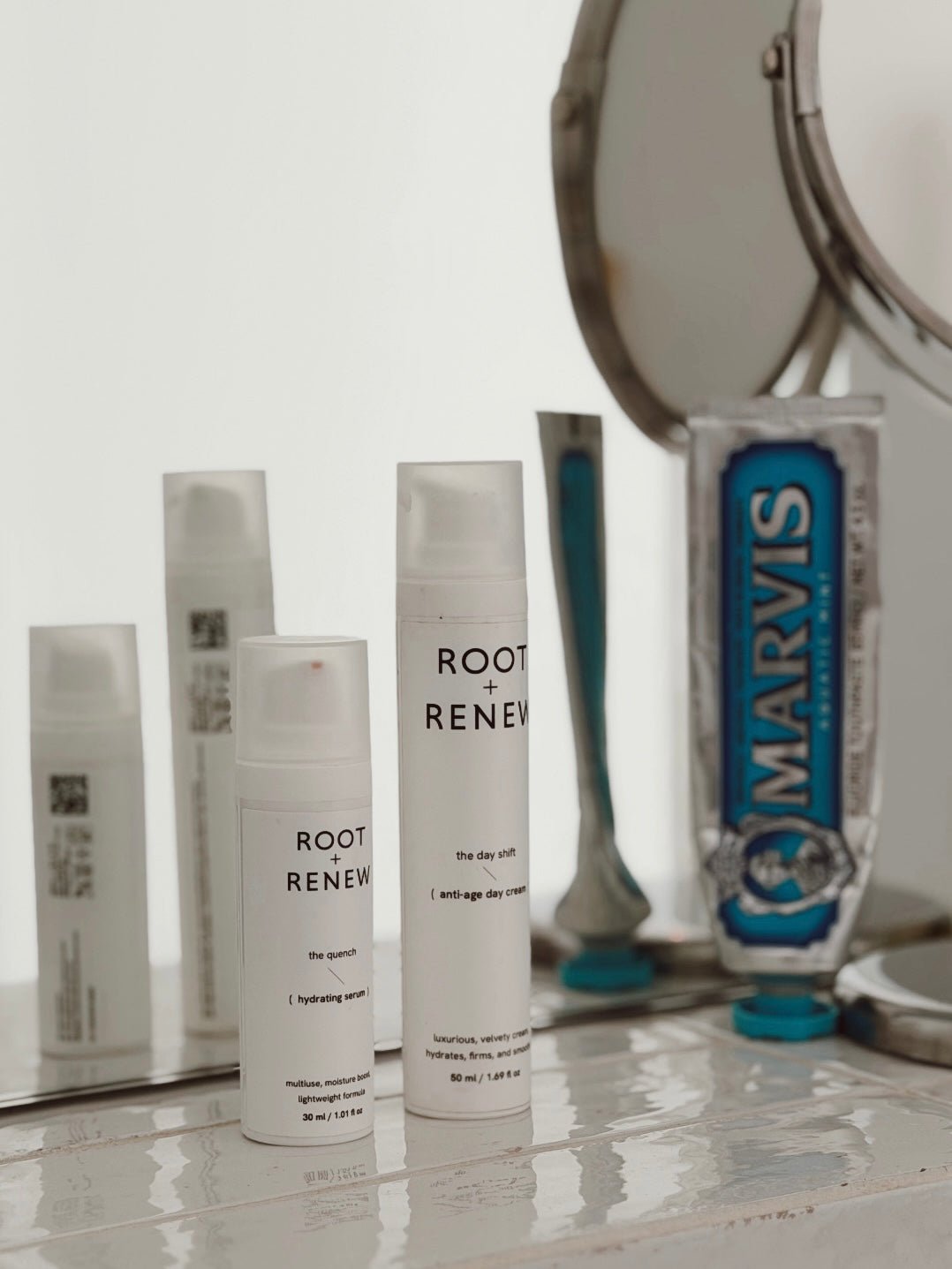
- Dehydrated skin: Start with a hydrating serum such as The Quench — Hydrating Serum, which helps bind water to skin in a lightweight, non-greasy layer. Follow with a simple moisturizer (like The Moisture Boost — Moisturising Day Cream) to seal in that hydration.
- Dry skin: Focus on a good barrier-supporting moisturizer. Serums can support comfort, but a moisturizer is your non-negotiable.
- Both dry and dehydrated: Use a hydrating serum and a moisturizer together. If your skin often feels both tight and flaky, this two-step combo addresses both water and oil needs without overcomplicating your routine.
Why Not Just One or the Other?
Hydrating serums usually deliver water-binding, lightweight ingredients to the skin; they’re designed to quench thirst, not replace skin’s natural oils. Moisturizers generally deliver both hydration and essential lipids, forming a semi-occlusive layer that helps prevent transepidermal water loss. If you use only serum, water can evaporate quickly without a sealing step. If you use only moisturizer on truly tight, depleted skin, you may not give your skin enough water to hold onto, especially after cleansing.
What Actually Happens When You Use Each Step?
Hydrating Serum: Targeted Boost for Dehydration
- Penetrates easily, often formulated with humectants like hyaluronic acid or glycerin
- Best applied to clean, slightly damp skin for maximum absorption
- Works well in all routines, especially for skin that feels tight or lacks bounce
The Quench — Hydrating Serum is a good example of this step in action. Designed to be used before moisturizer, it brings water to the skin's surface for improved visible plumpness and comfort. More details on hydration serums are available in our deep dive on hydration serums.
Moisturizer: Barrier Support for Dryness (and More)
- Seals in hydration, replenishes lost oils, and supports the skin barrier
- Crucial for people with dry skin and those living in harsh climates
- Choose texture (cream, gel, fluid) based on your skin's comfort and needs
A moisturizer like The Moisture Boost — Moisturising Day Cream helps reduce dryness, discomfort, and visible flaking. If you want to see what sets barrier-centered creams apart, we outline the basics in our barrier health series.
Simple Routine Guides
For Dehydrated Skin
- Cleanse gently. Avoid that squeaky clean, tight feeling.
- Apply a hydrating serum to still-damp skin.
- Seal in with a moisturizer.
- Use sunscreen in the morning for daily barrier defense.
This routine keeps moisture where you need it most, without overload. For more on cleansing without stripping your skin, see our gentle cleansing tips.
For Dry Skin
- Cleanse once or twice daily with a gentle cleanser.
- Apply moisturizer while skin is still slightly damp.
- Add a hydrating serum only when prone to visible dullness or tightness on top of chronic dryness—don’t layer extra steps if not needed.
- Finish with sunscreen in the morning.
All-day comfort generally starts with a single, uncomplicated moisturizer for dry types.
If Your Skin Is Both Dry and Dehydrated
This isn’t rare. Combine both steps and simplify everywhere else to avoid overwhelming your skin. Often, just these two steps make the most visible difference in texture and comfort.
Common Skincare Mistakes That Worsen Dryness or Dehydration
- Over-cleansing or using harsh cleansers
- Skipping moisturizer because skin is oily, but overlooking dehydration
- Relying on serum alone without sealing with moisturizer
- Over-exfoliating, which compromises your skin barrier
- Assuming every rough patch means dry skin, when dehydration can create similar symptoms
If you need help building a barrier-first routine, our Routine Builder helps you choose the right steps based on your specific symptoms, not just trendy products.
Best Practices for Simpler, More Effective Routines
- Always use a gentle cleanser, especially if your skin feels tight after washing
- Apply hydrating serums before moisturizer, not the other way around
- Don’t overload your skin—stick to what feels comfortable and skip extra steps if your skin is consistently happy
- Let your skin guide product frequency (not just habit or hype)
- Prioritize your skin barrier, which is at the root of lasting hydration and comfort
- Use moisturizer as your anchor; add serums when you experience environmental stress, travel, winter, or noticeable dullness
You can read more about ingredient minimalism and why less is usually more in our skinminimalism guide.
When More Products Don’t Mean Better Results
At Root + Renew, we encourage you to resist stacking endless products. Your skin rarely needs a complex, multi-step program to thrive. If you find yourself confused or stuck, one of the best next steps is simplifying—sometimes, scaling down lets your skin reset and tell you what it actually needs.
Still Not Sure? Decision Guide:
- Tight, dull skin: Try a hydrating serum plus moisturizer
- Flaky, rough, always dry skin: Prioritize moisturizer
- Both tight and flaky: Use both steps—serum for water, moisturizer for oil
- Comfortable with your current moisturizer: No need to add a serum unless you notice dehydration cues (post-travel, winter, AC, after exercise)
Minimalism and listening to your skin’s signals work. You can always start with The Quench or The Moisture Boost, depending on whether hydration or comfort is the bigger issue, then adjust if needed.
Related Reading for Simpler, Barrier-First Skincare
- How to Protect and Restore Your Skin After Workouts, Travel, and Stress
- What Hydration Serums Really Do
- How to Choose a Gentle Cleanser
- Why Minimalism Wins in Daily Skincare
FAQs
Can oily skin be dehydrated?
Yes, dehydration is about water loss, not oil production. Oily and combination skin types can absolutely experience dehydration, especially after travel, air conditioning, or harsh cleansers.
Should I use serum before moisturizer?
Typically, yes. Serums deliver hydration to the upper skin layers, and moisturizer locks that in, supporting the barrier and reducing water loss.
If I only want one product, which should I pick?
If your primary issue is flakiness and roughness, start with a good moisturizer. If your skin feels consistently tight but not flaky, a hydrating serum might be the right first step. For many people, using both is the most effective, minimal solution.
Can moisturizer alone solve dehydration?
For mild dehydration, yes. For moderate or recurring dehydration, pairing a hydrating serum with your moisturizer can support a visibly plumper, more comfortable skin surface.
Why does my skin feel tight after cleansing?
That tight feeling is a sign your cleanser may be too harsh or your skin is dehydrated. Consider switching to a gentler cleanser and layering a hydrating serum with your moisturizer for improved comfort.
Skincare shouldn’t feel complicated or overwhelming. Building your best routine often starts with less, not more. At Root + Renew, we’re always here to help you understand your skin’s cues and build a barrier-first routine that fits naturally into your life, with as few steps as possible. Explore our Routine Builder and detailed Journal resources if you want deeper answers or personalized recommendations for your skin’s changing needs.