

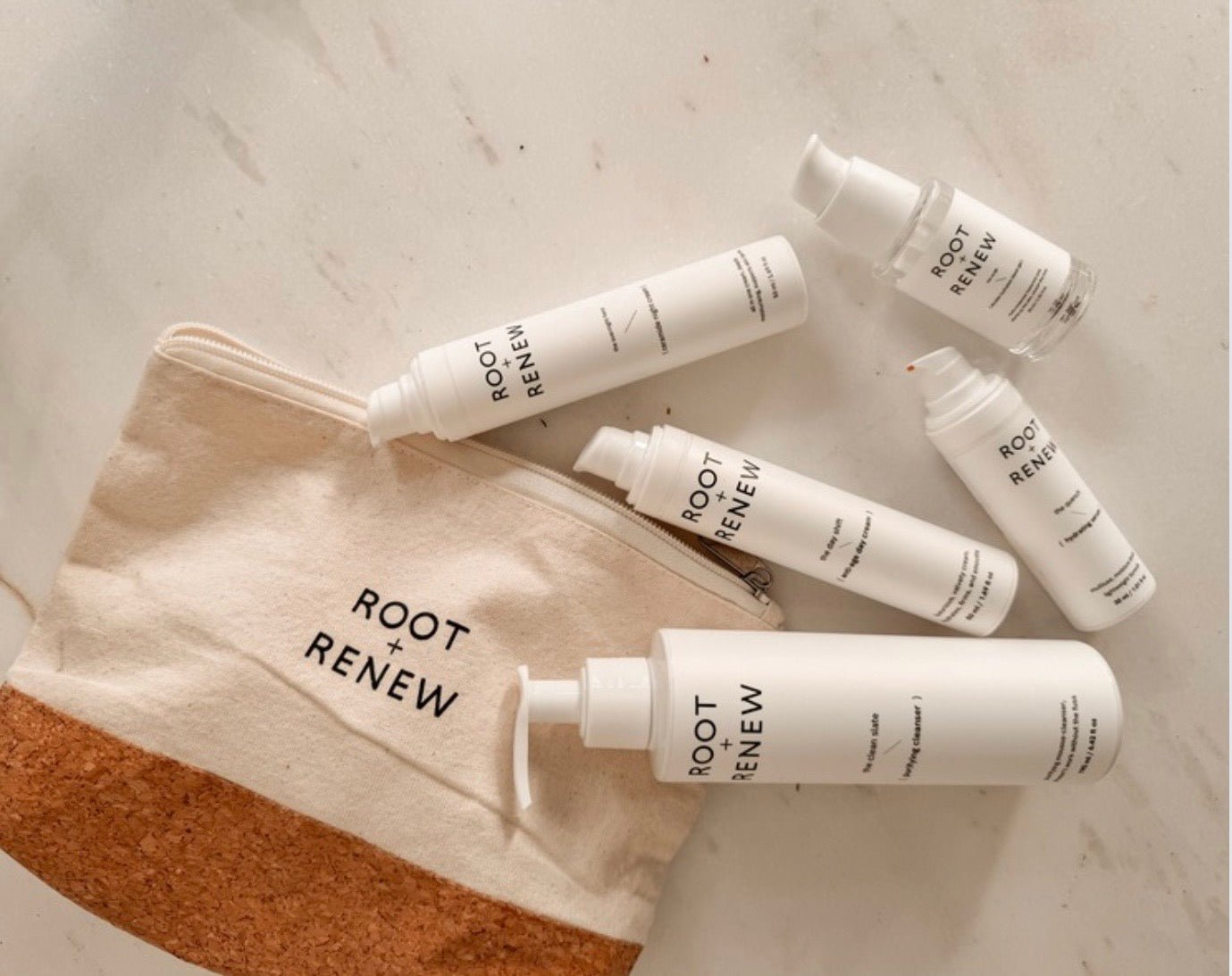
If you are trying to simplify your skincare routine, peptides and vitamin C can sound like they do the same thing. They do not. Vitamin C is best known for antioxidant support and helping improve the look of dullness and uneven tone, while topical peptides are used in formulas designed to support smoother, firmer-looking, well-hydrated skin. The better choice depends on what you want your routine to do.
You also do not need to use both. A simple routine built around cleansing, hydration, sunscreen, and one targeted serum can be more useful than layering multiple actives just because they are popular.
What Vitamin C Actually Does for Skin
Vitamin C is an antioxidant. In topical skincare, well-formulated vitamin C can help neutralize free radicals generated by environmental exposure, support collagen synthesis, and improve the appearance of uneven tone and discoloration over time.
That does not make vitamin C a replacement for sunscreen. Think of it as an additional antioxidant step. Broad-spectrum sunscreen remains the most important daytime product for protecting skin from UV exposure.
- For dullness: vitamin C can help skin look brighter and more even over time.
- For environmental stress: its antioxidant activity helps support skin exposed to everyday oxidative stress.
- For visible signs of photoaging: vitamin C plays a role in collagen synthesis, although results depend heavily on formulation, stability, concentration, and consistent use.
Vitamin C is commonly used in the morning because it pairs naturally with a daytime sunscreen routine, but it is not limited to morning use. If your skin tolerates it better at night, that is also an option.
If vitamin C matches your goal, The Healthy Glow is Root + Renew's vitamin C serum for targeted brightening and antioxidant support.
Peptides: The Coach Your Skin Needs
Peptides are short chains of amino acids, and there are many different types used in skincare. This is important because “peptides” are not one single ingredient with one guaranteed result. Different peptides are formulated for different cosmetic goals, and the quality of evidence varies by the specific peptide and formula.
In practical terms, peptide serums are often used to support hydration and improve the appearance of smoothness, firmness, and fine lines. Some peptides have promising research behind them, but claims that every peptide serum will dramatically rebuild collagen or repair skin are too broad.
- For a smoother-looking texture: peptide formulas can be a useful supportive step.
- For hydration and resilience: many peptide serums are built into hydrating, barrier-supportive bases.
- For a gentler targeted serum: peptides can be a good option for people who do not want another exfoliating or strongly acidic active.
The Rebound is Root + Renew's peptide serum, designed to support hydration, skin recovery, and a smoother, more resilient-looking complexion without adding a complicated routine.
Peptides vs. Vitamin C: The Real Difference
| What you are comparing | Vitamin C | Peptides |
|---|---|---|
| Primary role | Antioxidant support, brightness, uneven-looking tone | Support for hydration, smoothness, firmness, and skin resilience |
| Best fit | Dullness, discoloration, environmental stress | Fine lines, texture, dryness, or a need for a supportive serum |
| When to use | Morning or evening; often used in the morning with sunscreen | Morning or evening |
| What matters most | Formula stability, vitamin C form, concentration, and tolerance | The specific peptide, delivery system, overall formula, and consistency |
Can You Use Peptides and Vitamin C Together?
Usually, yes. There is no universal rule that says peptides and vitamin C cannot be used in the same routine. Whether they work well together for you depends more on the finished formulas and your skin tolerance than on a blanket ingredient conflict.
That said, using both is optional. If you want a simpler routine, use vitamin C in the morning and a peptide serum at night, or choose the one that best matches your current goal. There is also no need to wait an arbitrary three to five minutes between the two unless the instructions for a specific product tell you to.
Which Should You Use First?
If your main concern is dullness or uneven-looking tone, start with vitamin C. If you are more focused on hydration, fine lines, or supporting a smoother and more resilient-looking complexion, a peptide serum may make more sense.
If both goals matter, you can alternate them rather than turning one routine into a long stack of serums. Consistency with a routine your skin tolerates is more valuable than chasing the maximum number of actives.
A Simple Routine With Vitamin C or Peptides
Morning
- Cleanse if your skin needs it.
- Apply either a vitamin C serum or peptide serum.
- Follow with moisturizer as needed.
- Finish with broad-spectrum sunscreen.
Evening
- Cleanse away sunscreen, makeup, sweat, and daily buildup.
- Apply a peptide serum, hydrating serum, or another targeted product that matches your routine.
- Finish with moisturizer if needed.
Frequently Asked Questions About Vitamin C and Peptides
Should I use vitamin C or peptides in the morning?
Either can be used in the morning. Vitamin C is often chosen for daytime because of its antioxidant role, especially when paired with broad-spectrum sunscreen. Peptides can also be used in the morning if they better match your skin goals or formula preferences.
What order should vitamin C, peptides, moisturizer, and SPF go in?
If you choose to use both serums in the same morning routine, follow the directions for the finished products and generally apply lighter formulas before richer ones. Moisturizer comes after serums when needed, and broad-spectrum sunscreen should be the final skincare step before makeup.
Do I need to wait between vitamin C and peptides?
There is no universal evidence-based waiting period. Unless a specific product tells you otherwise, you do not need to time an arbitrary delay between the two.
Can I use vitamin C and peptides at the same time?
Usually, yes. The finished formulas and your skin tolerance matter more than a blanket rule about the ingredient categories. If using both makes your routine feel complicated or your skin becomes irritated, separate them between morning and evening or choose the one that best matches your current goal.
Peptides vs. Vitamin C: The Bottom Line
Vitamin C and peptides are not interchangeable. Vitamin C has a stronger role as an antioxidant and brightening ingredient, while peptides are a broad category used in formulas aimed at supporting smoother, firmer-looking, hydrated skin. Neither needs to be in every routine.
Start with the skin goal you actually want to address, introduce one targeted product at a time, and give your routine enough time to judge how your skin responds.


